ALBERTO ORTEGA-TREJO
Artist, researcher and architectural designer.
Get in touch by clicking here: ✉
His work uses architecture,
drawing, sculpture, writing and video to explore histories of indigeneity in architectural
modernity, the production of extreme environments, the spatial politics of the colonial encounters in North America and the architectures of social experiments. He has been
an IDEAS Fellow of the Society of Architectural Historians and a grantee of Jumex
Foundation for Contemporary Art, Andrew W. Mellon Foundation, and DCASE,
among others. His work has been shown at Prairie, DePaul Art Museum, BienalSur, Ca’ Foscari
Zattere, Rhona Hoffman Gallery, Andrew Rafacz Gallery, Uri-Eichen Gallery, SpaceP11, and Centro de Arte y Filosofía. He has been a guest speaker for institutions and
organizations like the American Institute
of Architects, the Society of Architectural Historians, Smart Museum of Art, Committee on Environment Geography and Urbanization, DocTalks x MoMA, Materia
Abierta, UPenn, MAS Context and CENTRO.
He has taught Architectural History and Studio at the School of the Art Institute of Chicago, and he served as Program Manager of the Katz Center for Mexican Studies at the University of Chicago from 2021 to 2026. Ortega-Trejo is currently a PhD student in Architectural History and Theory at Princeton University.
ARTIFICIAL-AGENCY
Architectural Consultancy
Exhibition Strategy
Research and Publication
Previous clients and collaborators include, Public Media Institute, North East Asia Art Archive, Art Institute of Chicago, Singapore Art Museum, Edith Farnsworth House, Goethe-Institut Chicago, Michael Rakowitz Studio, Black Athena Collective, Dawit L. Petros, and Center for Latin American and Caribbean Studies at The University of Chicago.
Keep scrolling for selected projects ↆ
Freedom, baby, is never having to say you’re sorry (The Caravan)
On Protest and Capitalism
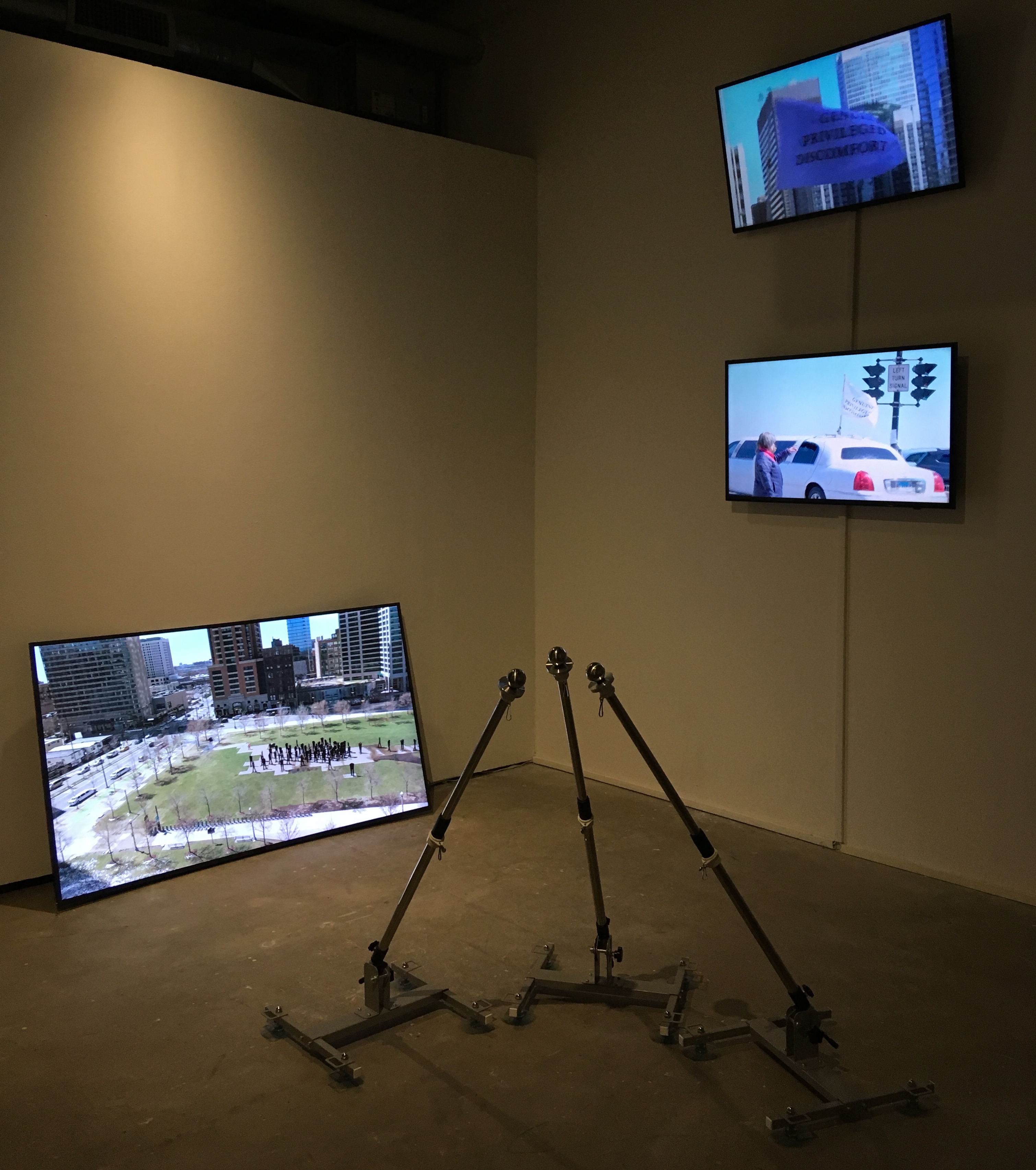
Video Installation, Sullivan Galleries
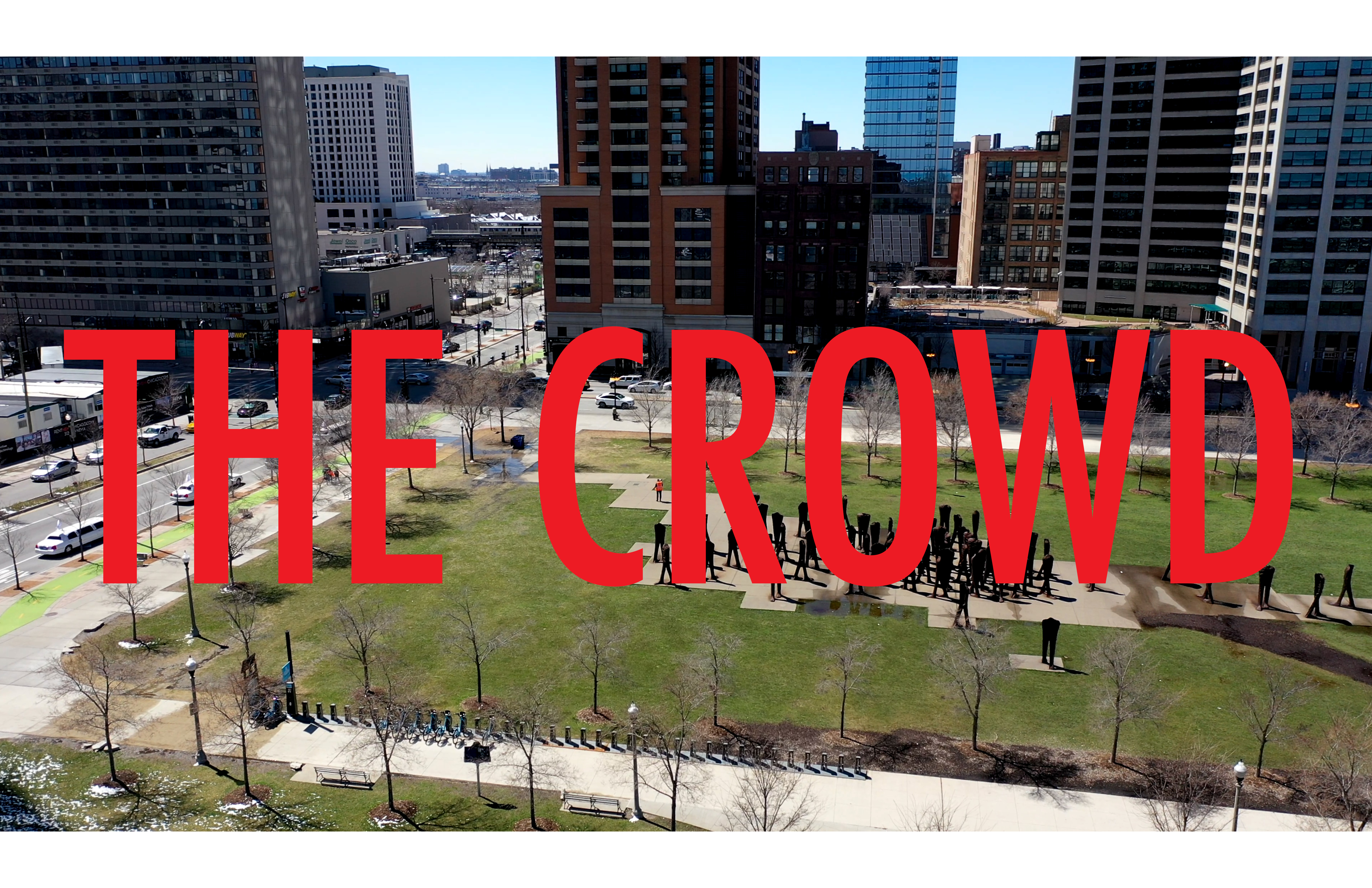
On Tax Day 2019—April 15th in the United States—I staged a deliberately ambiguous protest in Chicago using three white limousines. Recruiting the choreography of presidential motorcades, victory parades, and other spectacles of state power, The Caravan turns its logic inside out: What do protest, occupation of public space, and political efficacy even mean when every gesture is already absorbed, fed, and reproduced under hypercapitalism? The caravan’s route—Grant Park, Haymarket Square, Ida B. Wells Boulevard, Martin Luther King Drive—refuses tidy symbolism. Instead, it scrapes against the layered histories of labor struggle, racialized space, the vexed question of Whiteness, and the ancient, ungovernable fact of migration.
The flags were flashing the following slogans:
Automatic Protest Vehicle, After Protest, Privileged Discomfort
. The event was documented by a press car and a drone.
Video Installation: One curved 60” and two 48” monitors,
This project was possible thanks to the support of: Andrea Hunt, Joshi Radin and Ilona Gaynor.
The flags were flashing the following slogans:
Automatic Protest Vehicle, After Protest, Privileged Discomfort
. The event was documented by a press car and a drone.
Video Installation: One curved 60” and two 48” monitors,
This project was possible thanks to the support of: Andrea Hunt, Joshi Radin and Ilona Gaynor.